
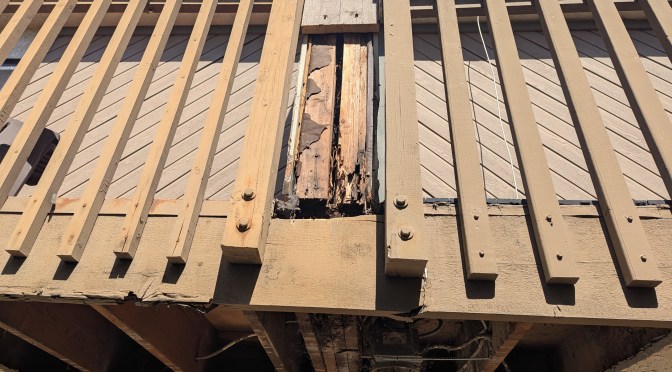
I’ve spoken with numerous reserve study folks about balconies/decks/walkways and the scope of work that replacing a balcony requires.
I’m not sure all of them understand that a waterproof deck replacement project is far more than just replacing the waterproofing system. Known as pedestrian traffic coatings, walking deck systems are composed of several different things, including flashings at the deck to wall and at any outside edges. Deck drains or scuppers may be involved. Door pans for the sliding or French door are also something that needs to be addressed.
In order for our readers to better understand, I’m going to break down the work a deck replacement involves.
So let’s say your exclusive use common area balconies are 25-30 years old, have been reasonably maintained but are now starting to require a lot of repairs. Your reserve study says the decks need to be replaced at year 25-30. Like any building component, deck waterproofing systems do wear out and need to be replaced.
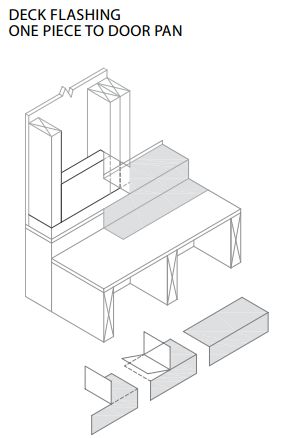
Let’s break down what a full deck replacement really looks like and my reserve study peeps can go back and see if their projected costs include the following basic scope of work. If you’re a Board member or HOA manager, you’ll want to ask your reserve study provider if they are taking all the work necessary into account for estimated costs of replacement.
So to start with, the deck waterproof coatings needs to be removed. This will also include removing and installing new plywood substrate. Always replace the existing substrate with plywood as it required by every traffic coating manufacturer. The contractor will need to open the walls in order to remove the deck to wall flashings as well as removing the sliding door to access the rough opening and the door flashing/door pan under the sliding door. Breaking open stucco or removing other wall finishes to remove and reinstall flashings requires restoration of the wall after the deck is replaced. Replacing a three coat stucco wall is one thing, but replacing other wall finishes such as EIFS or Hardi Board will incur further expenses. Older siding such as Masonite, an inexpensive siding that’s no longer manufactured, may require even more work to replace it with new current siding systems.

After stripping down the deck to the joists, some joists may be damaged and bed reports or replacement. Those unknown costs should have a line item in the reserve study under a unknown costs category. Maybe ask the hosts will be ok, maybe they won’t. It’s better to budget for some repairs.
The sliding door or French door needs to be removed to install a door pan. (Doors are usually an owner responsibility to maintain, repair and eventually replace.). This is a good time for old doors to be replaced with modern doors that have glass that reduces UV and heat coming through and are generally better at functioning and resisting rain and wind. Rarely will a contractor remove doors without first informing the HOA that doors may be damaged and that they aren’t responsible for any damages to the doors. If the doors are 25+ years old, owners should buy new doors.
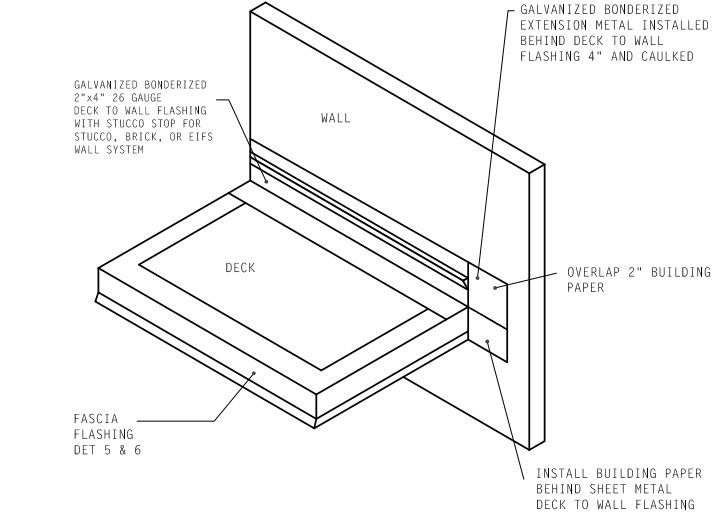
The deck, if it doesn’t already, needs to be sloped to drain, either to an open edge or to a deck drain or scuppers.
New flashings at the deck to wall need to be replaced with new flashings, integrated into the door pan. If there are scuppers on the outside wall, they need to be integrated with the deck to wall flashings.
Always replace deck drains that go through the floor of the deck during the deck replacement. Modern deck drains are using brass plumbing pipe and stainless steel flanges welded to the pipe.
A high quality deck waterproofing system is recommended. Cheap deck waterproofing systems have a shorter useable life span and generally require a lot more maintenance.
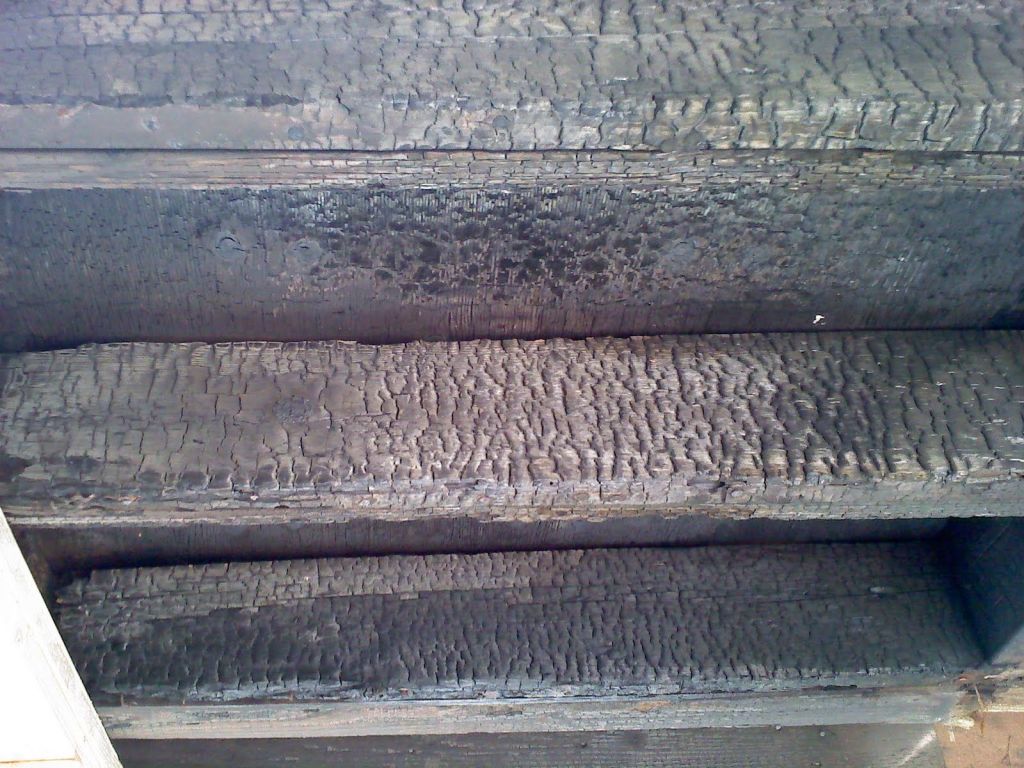
One issue that may arise during a deck replacement project is that you’ll probably need a building permit. New codes may take precedence. Right now code generally requires railings to be 42″ high and have openings 4″ apart or less. If your current railings don’t meet that standard, that’s a cost that doesn’t show up in a reserve study. So you need to have a contingency for increased costs necessary to meet building codes of the future.
Once your new deck system is installed and the walls are closed up and you turn the decks back to the resident, you now start the clock ticking on the maintenance cycle that the EEEs require. Many pedestrian traffic coating systems require resealing/painting the decks every 3-5 years. If you fail to do so and there’s a problem down the road, a warranty claim may be denied. Besides keeping the deck looking nice, a clean and reseal gives the association the ability to inspect thru deck and make any minor repairs before they become big repairs.
So your reserve study needs to have a line in it for deck maintenance. Your deck contractor can give you a schedule for resealing. Trust me when I say I recommend you follow the maintenance schedule. If you do you’ll maximize the expected life span of the waterproofing. Because of the costs to replace a deck earlier than it’s expected life span, you want to do this.
Your reserve study also needs a line item in it for reserving for the replacement costs of the deck again 25-30 years down the road.
Follow our advice and your association may realize lower costs in the future. If you fail to inspect ,maintain and repair,you can expect a shorter usable life span, and large costs to replace the deck before its time.
Does your association need help in determining costs, inspecting your decks for maintenance requirements or to get a grasp on what condition your EEEs are in to dial in your decks estimated life spans for your reserve study, reach out today. We can help your HOA take control of your EEEs rather than letting your EEEs control you.

