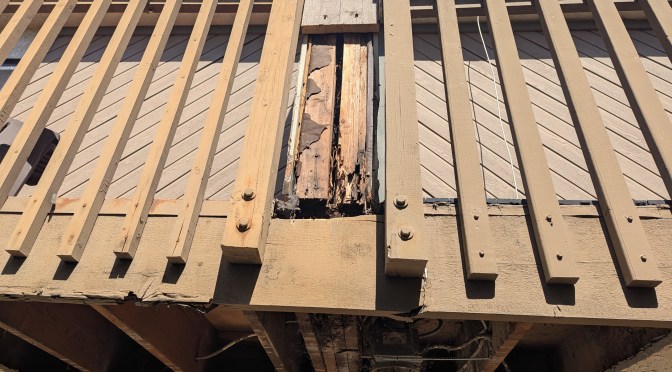
Tag Archives: Huntington beach SB 326 deck inspection

Does Your HOAs Reserve Study Include All the Costs/Work Involved to Replace a Balcony at the End of Its Useable Life?

I’ve spoken with numerous reserve study folks about balconies/decks/walkways and the scope of work that replacing a balcony requires.
You can read our article about installing deck waterproofing systems at our articles page here

I’m not sure all of them understand that a waterproof deck replacement project is far more than just replacing the waterproofing system. Known as pedestrian traffic coatings, walking deck systems are composed of several different things, including flashings at the deck to wall and at any outside edges. Deck drains or scuppers may be involved. Door pans for the sliding or French door are also something that needs to be addressed.

In order for our readers to better understand, I’m going to break down the work a deck replacement involves.

So let’s say your exclusive use common area balconies are 25-30 years old, have been reasonably maintained but are now starting to require a lot of repairs. Your reserve study says the decks need to be replaced at year 25-30. Like any building component, deck waterproofing systems do wear out and need to be replaced.
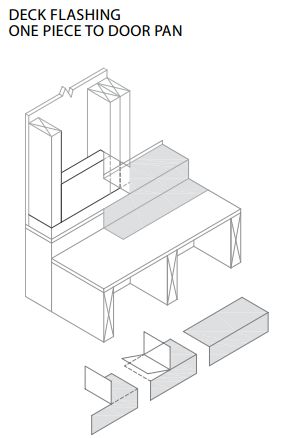
A typical detail that must be followed when installing new flashings and waterproofing.

Let’s break down what a full deck replacement really looks like and my reserve study peeps can go back and see if their projected costs include the following basic scope of work. If you’re a Board member or HOA manager, you’ll want to ask your reserve study provider if they are taking all the work necessary into account for estimated costs of replacement.

So to start with, the deck waterproof coatings needs to be removed. This will also include removing and installing new plywood substrate. Always replace the existing substrate with plywood as it required by every  traffic coating manufacturer. The  contractor will need to  open the walls in order to remove the deck to wall flashings as well as removing the sliding door to access the rough opening and the door flashing/door pan under the sliding door. Breaking open stucco or removing other wall finishes to remove and reinstall flashings requires restoration of the wall after the deck is replaced. Replacing a three coat stucco wall is one thing, but replacing other wall finishes such as EIFS or Hardi Board will incur further expenses.  Older siding such as Masonite, an inexpensive siding that’s no longer manufactured, may require even more work to replace it with new current siding systems.
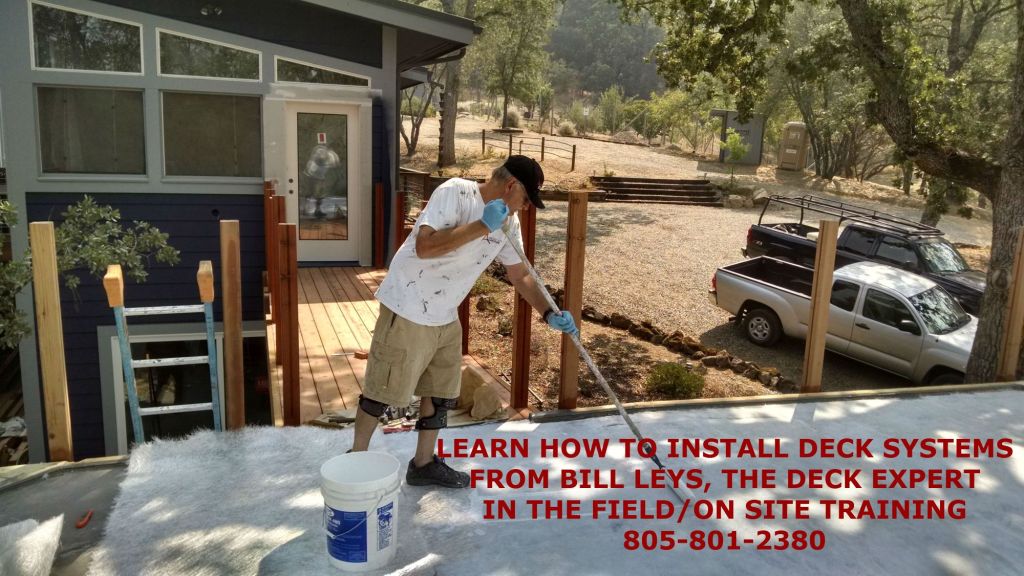
There’s an art to installing pedestrian traffic coatings.

After stripping down the deck to the joists, some joists may be damaged and bed reports or replacement. Those unknown costs should have a line item in the reserve study under a unknown costs category. Maybe ask the hosts will be ok, maybe they won’t. It’s better to budget for some repairs.

The sliding door or French door needs to be removed to install a door pan. (Doors are usually an owner responsibility to maintain, repair and eventually replace.).  This is a good time for old doors to be replaced with modern doors that have glass that reduces UV and heat coming through and are generally better at functioning and resisting rain and wind. Rarely will a contractor remove doors without first informing the HOA that doors may be damaged and that they aren’t responsible for any damages to the doors. If the doors are 25+ years old, owners should buy new doors.
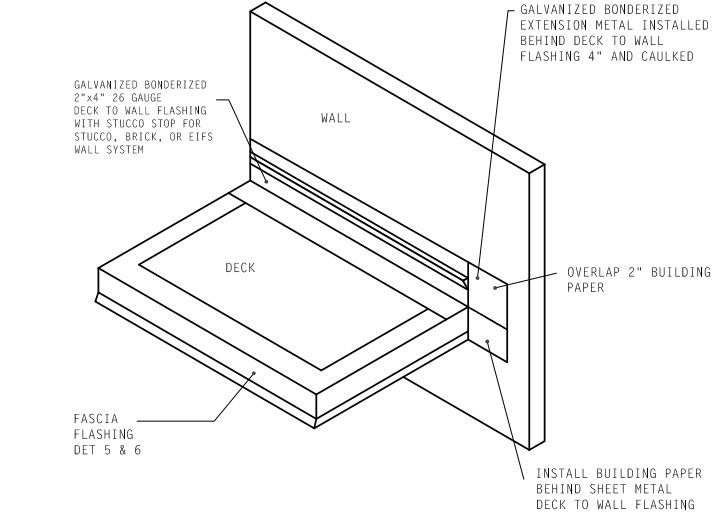
Typical balcony flashing system detail.

The deck, if it doesn’t already, needs to be sloped to drain, either to an open edge or to a deck drain or scuppers.

New flashings at the deck to wall need to be replaced with new flashings, integrated into the door pan. If there are scuppers on the outside wall, they need to be integrated with the deck to wall flashings.

Always replace deck drains that go through the floor of the deck during the deck replacement. Modern deck drains are using brass plumbing pipe and stainless steel flanges welded to the pipe.

A high quality deck waterproofing system is recommended. Cheap deck waterproofing systems have a shorter useable life span and generally require a lot more maintenance.
One issue that may arise during a deck replacement project is that you’ll probably need a building permit. New codes may take precedence. Right now code generally requires railings to be 42″ high and have openings  4″ apart or less. If your current railings don’t meet that standard, that’s a cost that doesn’t show up in a reserve study. So you need to have a contingency for increased costs necessary to meet building codes of the future.

Once your new deck system is installed and the walls are closed up and you turn the decks back to the resident, you now start the clock ticking on the maintenance cycle that the EEEs require. Many pedestrian traffic coating systems require resealing/painting the decks every 3-5 years. If you fail to do so and there’s a problem down the road, a warranty claim may be denied. Besides keeping the deck looking nice, a clean and reseal gives the association the ability to inspect thru deck and make any minor repairs before they become big repairs.

So your reserve study needs to have a line in it for deck maintenance. Your deck contractor can give you a schedule for resealing. Trust me when I say I recommend you follow the maintenance schedule. If you do you’ll maximize the expected life span of the waterproofing. Because of the costs to replace a deck earlier than it’s expected life span, you want to do this.

Your reserve study also needs a line item in it for reserving for the replacement costs of the deck again 25-30 years down the road.

Follow our advice and your association  may realize lower costs in the future. If you fail to inspect ,maintain and repair,you can expect a shorter usable life span, and large costs to replace the deck before its time.

Does your association need help in determining costs, inspecting your decks for maintenance requirements or to get a grasp on what condition your EEEs are in to dial in your decks estimated life spans for your reserve study, reach out today. We can help your HOA take control of your EEEs rather than letting your EEEs control you.
The Balcony Inspection Transparency Project is Coming!

We document. We disclose. You decide.

Is the HOA industry ready to demand transparency? We are!


Introducing the Balcony Inspection Transparency Project

http://www.balconytransparency.org (coming soon)


William Leys Waterproofing Consultants LLC is a founding member—and we are inviting other California inspection companies to participate.


California homeowners associations, apartment owners, community managers, and building owners are being asked to make important decisions about balcony and exterior elevated element inspections. Those decisions can affect occupant safety, association finances, reserve planning, repair priorities, and long-term property maintenance.


Consumers deserve to know exactly who they are hiring.


That is why William Leys Waterproofing Consultants LLC is a founding member of the Balcony Inspection Transparency Project, or BITP.


BITP is being developed as a source-based consumer-information project focused on companies offering balcony, deck, and exterior elevated element inspection services in California. Its purpose is straightforward: make important information about inspection providers easier to find, understand, compare, and correct.

I don’t want to do this just on my own, so if you would like to volunteer as a participant to ensure a fair and even process across the board, feel free to let me know!


We document. We disclose. You decide.


We Are Seeking Cooperation Across the Industry
BITP should not be a directory in which one company gets to ask questions of everyone else while avoiding those same questions itself.
William Leys Waterproofing Consultants LLC intends to complete the same transparency questionnaire offered to every participating company. We will identify our company’s ownership, services, professional relationships, role in SB 326 projects, relevant licenses and qualifications, business affiliations, and whether we or another participant may have a financial interest in related services.


We are inviting balcony inspection companies, engineering firms, architectural firms, contractors, consultants, and other businesses offering exterior elevated element inspection services to participate voluntarily and without charge.


Participating companies will have an opportunity to:
Describe their company and inspection process in their own words;


Identify who performs field inspections;


Explain who prepares, reviews, signs, or seals the final report;


List applicable California professional and contractor licenses;


Explain certifications and professional designations they advertise;


Disclose relationships with credentialing organizations, training companies, associations, engineering firms, contractors, and repair providers;


Describe insurance and conflict-of-interest practices;


Provide supporting records and links; and
Correct, clarify, or update information appearing in their profile.


Download the Fillable BITP Company Questionnaire


Submit a Company Profile Online


What Consumers Should Be Able to Learn


A company profile should answer more than, “Does this business advertise balcony inspections?”


Consumers should be able to determine:


Who is actually performing the fieldwork?


Who exercises the professional judgment required by the applicable law?


Who is responsible for the final report?


What California licenses do those people hold?


Is an advertised certification governmental, private, association-issued, manufacturer-issued, or simply evidence of completing a training course?


Who created and controls the organization issuing that certification?


Does the inspection company—or a related business—perform repairs arising from its findings?


Are referral fees, commissions, reciprocal referrals, or other financial relationships involved?


Are important advertising claims supported by current, identifiable sources?


These questions do not assume that a particular business arrangement is improper. Inspection companies can be structured in many legitimate ways. Engineers, architects, contractors, consultants, technicians, and specialty firms can each have appropriate roles depending on the property, applicable statute, agreement, supervision, and scope of services.


The important point is that the consumer should not have to guess what those roles and relationships are.


Participation Is Not Certification or Endorsement


BITP will not call participating companies “BITP Certified.” Participation will not mean that BITP has approved, recommended, ranked, accredited, or guaranteed a company’s work.


A participating company will be identified as having supplied standardized information. Individual fields may be labeled:


Company supplied;


Company representation;


Corroborated by identified source;


Not independently reviewed;


Not disclosed; or


Disputed information.


Profiles may be published after private administrative review even when every factual field has not yet been independently corroborated. Unreviewed information will be labeled accordingly. That distinction allows companies to participate promptly without causing consumers to mistake company-supplied information for government verification or BITP endorsement.


What If a Company Does Not Participate?


Participation is voluntary. A company’s decision not to complete the questionnaire does not prove that the company has done anything wrong.
BITP may nevertheless create a Public-Information Profile using identified sources such as government licensing databases, Secretary of State records, company websites, archived webpages, published advertising, organizational records, and other material that can reasonably be authenticated.


Those profiles will be conspicuously labeled:


Public-Information Profile


This profile was compiled from the identified public sources. No completed, authorized company questionnaire has been incorporated as of the date shown.


Companies will be encouraged to respond, submit corrections, provide additional context, or complete the full questionnaire.


Why Hesitation Deserves Closer Attention


Balcony and exterior elevated element inspections can involve life-safety concerns and significant financial consequences. A credible provider should be prepared to answer reasonable questions about identity, qualifications, responsibility, and financial relationships.


If a company is hesitant or unwilling to identify who performs the inspection, who signs the report, what license the responsible professional holds, who issues an advertised certification, or whether affiliated businesses may profit from resulting work, a prospective client should pause and investigate further before signing a contract.


That hesitation is not proof of illegality, incompetence, dishonesty, or an improper conflict. There may be a reasonable explanation. But unanswered questions involving professional responsibility and financial interests are relevant warning signs. Consumers should request written clarification, verify public records, compare other providers, and decide whether they are comfortable proceeding.


Transparency does not require every company to use the same business model. It requires the company to describe its model accurately.


Why We Believe Transparency Improves the Industry


Clear disclosure rewards companies that are willing to identify the people performing the work, explain credentials accurately, disclose affiliations, and distinguish inspection services from repair opportunities.


It also helps consumers compare proposals on something more meaningful than price alone.
An HOA board should be able to compare:


The actual inspection scope;


The qualifications and role of each participant;


The applicable sampling approach;


The person responsible for professional findings;


The report and follow-up services included;


Potential additional charges;


Credential and association relationships; and
Any financial interest in subsequent testing, design, construction, or repair work.


When those facts are clear, responsible providers compete based on documented qualifications, defined scope, professional accountability, and the value they provide.


BITP Will Accept Corrections, Responses, and Consumer Evidence


The Project is also being designed to accept documented corrections, company responses, and private consumer-experience submissions.
Consumer submissions will not appear automatically as anonymous reviews or star ratings. BITP may privately verify the submitter, examine supporting documents, redact personal information, seek a company response, and distinguish between firsthand experience, company statements, public records, and BITP analysis.


The goal is not to create a complaint wall. The goal is to build a useful, fair, and correctable information resource.


Our Own Interest Will Be Disclosed


BITP is founded and published by William Leys and William Leys Waterproofing Consultants LLC. WLWC operates in the waterproofing consulting and balcony inspection-related industry. We therefore have a commercial and professional interest in the subject matter.


We will disclose that interest rather than describe BITP as an independent review website. When BITP discusses a person or company with whom the publisher has had a material business, regulatory, legal, or competitive relationship, that relationship should be specifically disclosed on the relevant page.


The credibility of the Project must come from consistent questions, identified sources, fair attribution, meaningful responses, visible corrections, and standards applied to WLWC as well as everyone else.


An Open Invitation to California Inspection Providers


If your company provides SB 326, SB 721, balcony, deck, waterproofing, or exterior elevated element inspection services in California, we invite you to become part of the Balcony Inspection Transparency Project.
Participation is free.


Tell consumers who you are. Identify the people responsible for your work. Explain your credentials. Disclose relevant affiliations. Provide sources that allow important information to be checked. If something in a profile is incomplete or wrong, help us correct it.
We are not asking other companies to disclose information that we are unwilling to disclose ourselves.


Download the Fillable Questionnaire (Coming soon)


Learn More About the Balcony Inspection Transparency Project


Publisher disclosure: The Balcony Inspection Transparency Project is founded and published by William Leys and William Leys Waterproofing Consultants LLC, which provides waterproofing consulting and balcony inspection-related services in California. Participation in BITP does not constitute certification, approval, ranking, recommendation, or endorsement.


William Leys Waterproofing Consultants LLC
805-801-2380
wleyswaterproofingconsultants.com

Notice to HOAs in Need of an SB 326 Inspection

“California does not issue or require a credential called a ‘Certified Deck Inspector’ for SB 326 inspections. Private organizations may issue their own certificates, but consumers should determine who issued the credential, whether the certifying organization is independent of the inspection company, and whether the credential actually qualifies the individual to perform the inspection required by the applicable California statute.”

If you see the term “certified” in any advertising, website or stated orally by a salesperson, owner or company representative, all we can say is “Caveat Emptor” or in plain English, buyer beware.

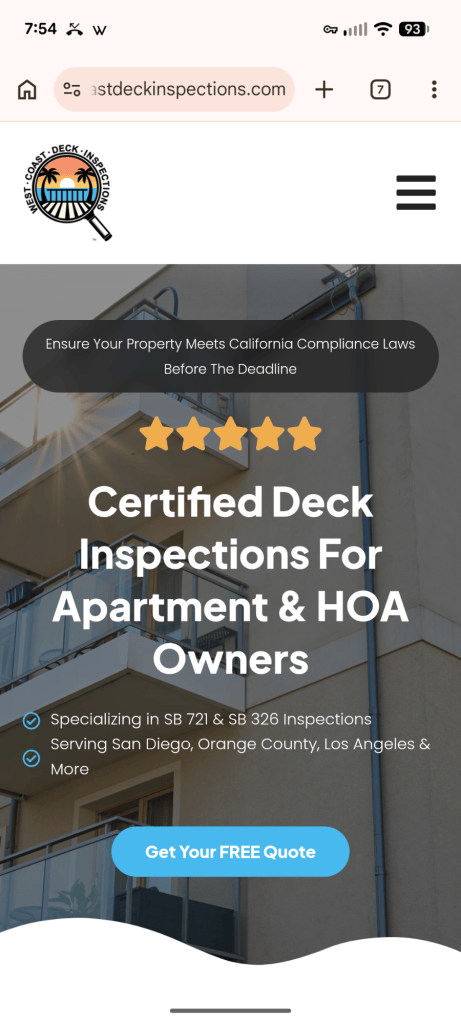
Just because they say you inspection is “certified”, doesn’t mean it is. This website as shown above in this screenshot may mislead consumers into believing that this firm is more qualified to do EEE Inspections than others who don’t advertise as being “certified”.

Great inspection firms don’t need to puff themselves up with dubious certifications no one has ever heard of. We don’t claim that our reports are “certified” because there’s no such thing. Certified by whom? A private entity? A recognized non profit building & construction group such as NADRA or IIBEC? Don’t be fooled by the term certified as thrown about on some inspection companies websites. If someone claims their report is certified, ask them by whom is it certified and under what standards and can I see those standards? If you dig, you may find that the claim of “certified reports” is self serving.

Continue reading Notice to HOAs in Need of an SB 326 Inspection →

Transparency Matters: How We’ve Clarified Our SB 326 Inspection Process

Our Updated Logo Reflects Our Role Coordinating SB 326 Inspections

At William Leys Waterproofing Consultants LLC, we believe that an HOA board should understand exactly who it is hiring, what services each professional will provide, and who is responsible for the engineering judgments required as part of an SB 326 inspection.

Recently, correspondence from the California Board for Professional Engineers, Land Surveyors, and Geologists (BPELSG) gave us an opportunity to take a closer look at how we described our SB 326 services on our website and in our proposals.

We took that opportunity seriously.

The result is a clearer and more transparent description of our role, the role of the licensed structural engineering firm performing the engineering services, and how the different parts of an SB 326 project are coordinated for our clients.

Why We Made Changes


SB 326 projects can involve several different disciplines.

There is an important distinction between waterproofing and building-envelope consulting, project coordination, and the professional engineering services that California law reserves for appropriately licensed professionals.

Although we understood those distinctions in practice, the Board’s correspondence caused us to examine whether they were communicated clearly enough in our marketing and contractual documents.

We concluded that we could do better.

Rather than simply changing a few words, we reviewed our website and proposal language with the goal of making the relationship easier for an HOA board, community manager, or building owner to understand before retaining us.

Clearly Identifying Who Performs the Engineering Work

One of the most important changes is greater clarity about the licensed engineering firm’s role.

William Leys Waterproofing Consultants LLC is a waterproofing consulting and project-coordination company. We do not represent ourselves as a licensed engineering firm.

When professional engineering services are required for an SB 326 project, those services are performed by the licensed engineering firm identified for the project.

That distinction is now stated more clearly in our materials.

The engineer is responsible for the engineering observations, professional opinions, determinations, and engineering report within the engineer’s scope of services. The engineering report is prepared and signed or sealed as required by the licensed professional responsible for that work.

Our role is separately described so clients can understand the services William Leys Waterproofing Consultants provides.

What William Leys Waterproofing Consultants Brings to the Project

Our expertise is rooted in waterproofing.

We have been inspecting decks and evaluating waterproofing conditions since 2007. That field experience gives us a practical understanding of how exterior elevated elements are constructed, how waterproofing systems deteriorate, where water commonly enters assemblies, and how seemingly minor waterproofing defects can contribute to much larger problems.

On an SB 326 project, our work may include project coordination, documentation, communication with the client and engineering firm, waterproofing-related observations and consulting, and coordination of other services within our agreed scope.

But experience with waterproofing does not turn a waterproofing consultant into an engineer.

We believe clients deserve to understand that distinction.

Transparency Should Start Before the Contract Is Signed

An HOA board should not have to decipher a website or proposal to figure out who will actually perform the professional services being offered.

Our revised approach is intended to answer those questions upfront.

Before retaining us, a prospective client should be able to understand:

– who the client is contracting with;
– what William Leys Waterproofing Consultants LLC is responsible for;
– which services will be performed by a licensed engineering firm;
– who is responsible for professional engineering judgments and the engineering report;
– what services are included in the proposed scope; and
– what additional investigation or services may be recommended if conditions discovered during the project warrant them.

We believe this level of clarity is good for everyone involved.

Taking Regulatory Guidance Seriously

Businesses sometimes view questions from a regulatory agency as something to fight or minimize.

We chose a different approach.

The Board’s correspondence gave us a reason to review how we communicated our services and ask a straightforward question:

Could an HOA board reading our website or proposal misunderstand who is performing the engineering services?

Where we believed the answer could possibly be yes, we changed the language.

That process has resulted in materials that we believe more accurately describe the respective roles of William Leys Waterproofing Consultants and the licensed engineering professionals involved in an SB 326 project.

Experience and Professional Licensure Are Different Things

California’s SB 326 inspection requirements exist for an important reason: exterior elevated elements can present serious safety concerns when deterioration is allowed to progress unnoticed.

A successful inspection program therefore benefits from both professional engineering judgment and practical knowledge of waterproofing systems and the conditions that cause them to fail.

Those are complementary areas of expertise, but they are not interchangeable.

Our goal is not to blur that distinction. It is to make it clear.

A Better Process for Our Clients

We believe the changes prompted by the Board’s correspondence have made our company better.

Our website is clearer. Our proposals are clearer. The responsibilities of the participants are better defined. And prospective clients receive more information about the structure of the engagement before deciding whether to hire us.

For an HOA board making decisions involving building safety, association funds, and long-term maintenance obligations, transparency shouldn’t be an afterthought.

It should be part of the inspection process from the beginning.

—

Questions About an SB 326 Project?

William Leys Waterproofing Consultants LLC provides waterproofing consulting and SB 326 project-coordination services for homeowners associations and building owners throughout California.

If your association is preparing for an SB 326 inspection or trying to understand the condition of its exterior elevated elements and waterproofing systems, contact us to discuss the project, our scope of services, and the role of the licensed engineering professionals involved.

Continue reading Transparency Matters: How We’ve Clarified Our SB 326 Inspection Process →

Balcony Collapse in Hawaii Injures Seven People!

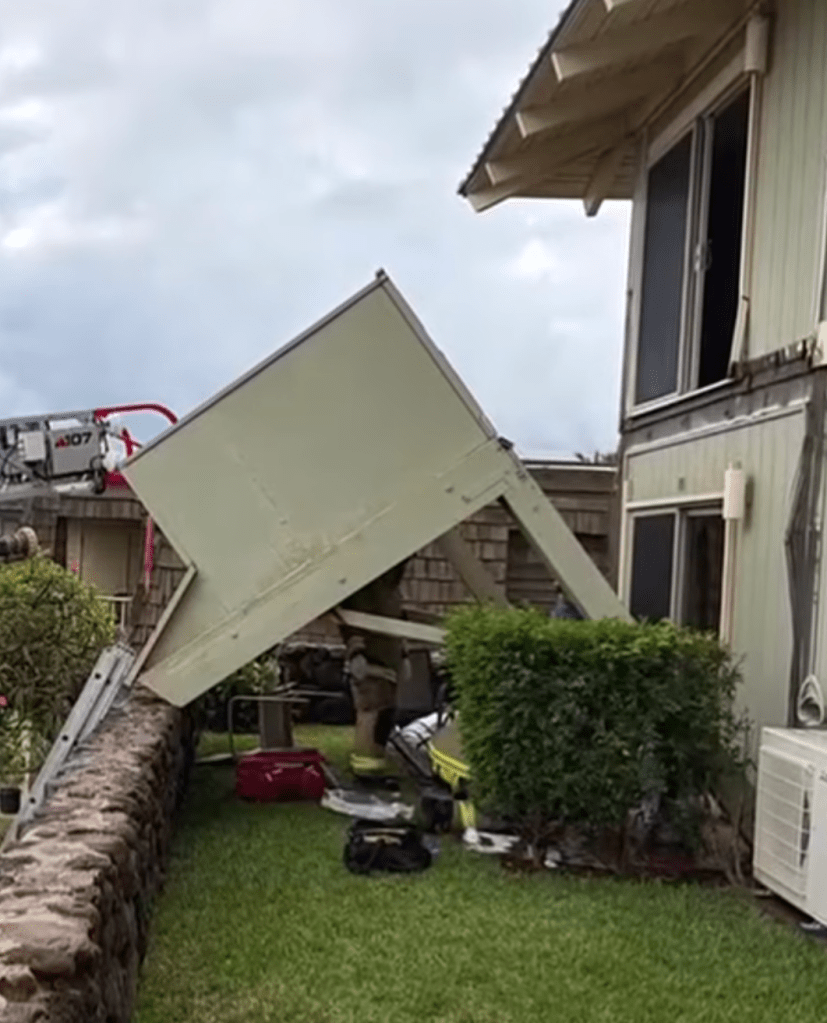
We’re still trying to get more information, a balcony collapsed in Hawaii with 7 people on it. The balcony appears to have only been nailed to the building from what we can see.

As seen here, the deck appears to have fallen off the building. It appears to have been nailed into the building instead of bolted. An inspection probably would have caught that flaw.
Photo used under the fair use doctrine for education.

This is why inspections matter! The 11th anniversary of Berkeley was two days ago, and here we are again, another collapse. For the people on this balcony, they were injured but they will all be going home from reports I’ve read.

Please schedule your inspection ASAP, if you are renting property either through Airbnb or long-term, protect yourself and your tenants with an inspection.

We serve San Luis Obispo County as well as Santa Barbara and Ventura County for deck inspections under SB326 and general inspections for rental and personal property.

Call today 805-801-2380

This Is How We Think Some of Our Competitors Do Their Balcony Inspections for The Price They Charge…

Does your inspection company have 1099 contractors using Pogo sticks to perform your balcony inspection? This might be a little exaggerated, but the point is, a cheap inspection is a cheap inspection. Hiring the wrong inspectors could cost your HOA dearly. Read on…

Not actual footage of a deck inspection company doing SB326 inspections, but it seems that this method is used in many cases. Blurry photographs, unclear reports, inspections done by 1099 contractors, that low fee for a Stage 1 SB 326 inspection is a loss leader that turns into sky-high engineering and repair fees.

There are still quite a few HOAs out there that haven’t had a balcony inspection done yet. Many are smaller, self managed HOAs that haven’t heard of SB326. These smaller associations are easy prey for unsavory unethical inspection companies that need to feed their never ending high overhead.

By offering ridiculously low initial inspection fees, they Hoover up the unsuspecting HOAs into their pipeline. Once the HOA is in their grasp, they ratchet up the pressure on them; saying you have deck problems and the City is going to fine you $500 a day if you don’t immediately comply… And then they tell you that you need their engineering services, which might be true, although often times it’s not.

This is where the cheap bid the company gave you turns into a high cost engineering job, often costing thousands more than what ethical firms charge. Don’t fall for low fees; all it means is there won’t be an engineer present doing the inspection. That low fee, that’s hundreds or thousands less than legitimate engineers and waterproofing experts fees means there’s going to be a guy on a Pogo stick getting paid $280 a day (we have the help-wanted ads to prove it!) to bounce around your HOA going as fast as he can. He’s probably received very little training, has zero experience in actually building, waterproofing or inspecting decks, yet some people believe that the inspection is just as good as the experts inspections are.

At William Leys Waterproofing Consultants LLC, we  coordinate the independent engineering company to perform are dedicated to providing the very best inspection possible. We know that inspections save lives, protect property and more importantly, reduce liability for the HOA, the HOAs insurance company and the management company.

Bill Leys has performed hundreds of SB 326 waterproofing observations since 2020, and with our independent structural engineer, provides peace of mind to our clients.

Call us today for a free conversation about how we inspect, why we’re better and why your HOA is in good hands with us! Call 805-801-2380 today!

Our peers know who the best inspectors are!

SB 326 Inspection Coordination Specialists William Leys Waterproofing Consultants LLC Discovers Hidden Dangerous Railing Defects at a Redondo Beach Condo

As deck inspection experts who concentrate on SB 326 waterproofing observations for condos, we see a lot of defects in our line of work.

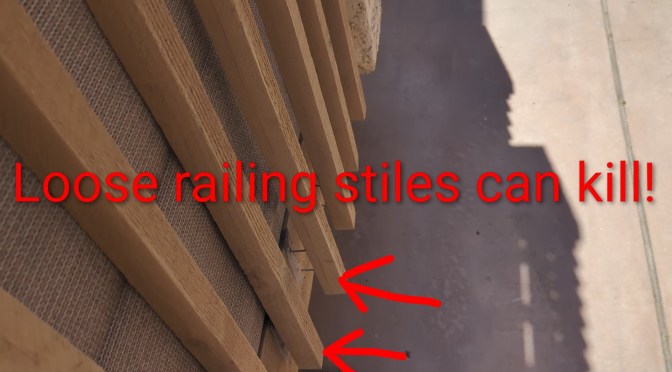
This week was no different, at an inspection we performed with our  independent engineer the engineer found numerous railings that were structurally compromised. The wood railings on 16 decks were assembled using nails to fasten the stiles to the railing frame.

Engineers don’t like nails for fastening structural railings meant to prevent falls from the deck. In the past, nails were the method most often used, whereas today structural screws are required. At this property the engineer checks the railings by pushing on them and with a light kick at the bottom. To our horror, the engineer discovered numerous railing stiles were not able to withstand a light kick without pushing out with the nails.

Continue reading SB 326 Inspection Coordination Specialists William Leys Waterproofing Consultants LLC Discovers Hidden Dangerous Railing Defects at a Redondo Beach Condo →

Railing Failure in Boston Sends Two People to The Hospital

This is another reason why EEE inspections are necessary!

At William Leys Waterproofing Consultants LLC, we take balcony inspections very seriously as life safety is paramount! Don’t wait until an accident happens, even though no one died in this accident, we’ll bet good money that one or both victims of this railing failure will bring a lawsuit against the building owner. A good inspector likely would have flagged the railing as being unsafe.

Here at William Leys Waterproofing Consultants LLC we have found many structural deficiencies over the years on EEEs we have inspected. We have had to post notices informing residents that the balconies were off limits until repairs were made.

Our warning notice to not use the deck until it is fixed
When decks fail structural inspections, they need to be closed from use until repairs are made.
Continue reading Railing Failure in Boston Sends Two People to The Hospital →

A Client Asks Us “There Are So Many Deck Inspection Companies, Aren’t They All The Same?”

The answer in short is no, all inspection companies are not the same. Here is an explanation on why inspection companies are not at all equal in experience, ethics and in following the balcony bill requirements.

The SB 326 balcony inspection bill failed to ban inspectors from owning construction companies and failed to ban inspectors who own waterproofing and construction companies from bidding on jobs they inspected, so unscrupulous individuals are popping up to take advantage of unsuspecting and unknowledgeable consumers. 

Without a doubt, during your Google search you are bound to come across  deck inspection companies advertising on the world wide web which are run by individuals who opened a deck inspection company to take unfair advantage of HOAs despite their contractors licenses having complaint disclosures listed on their license for such offenses such as failing to complete work for the price quoted in their contract, taking a deposit in excess of $1,000, hiring unlicensed sub contractors and departing from trade standards.

We personally know of one deck inspector/deck inspection company who is under active investigation by the Board of Engineers for practicing engineering without an engineering license. That investigation was opened in July 2025 and remains active today.

Continue reading A Client Asks Us “There Are So Many Deck Inspection Companies, Aren’t They All The Same?” →

Watch Our Videos on TikTok, Insta & YouTube!

Did you know that we have a YouTube, Instagram and TikTok channel for you to keep up with us? Yep it’s true.

We post our latest videos first on TikTok. Follow us here  http://tiktok.com/@bill_leys_the_deckexpert

Then we generally post to YouTube a few days later. Follow us here https://youtube.com/@bill-leys-is-the-deck-expert?si=CkGOi5RC7ps4w_Z0

Soon after we post the videos to Instagram, follow us here https://www.instagram.com/wleyswaterproofingconsultants?igsh=MzRlODBiNWFlZA==

We appreciate the outreach from so many people around the state who are appreciative of what we’re doing here at William Leys Waterproofing Consultants LLC!

If you don’t trust your balcony inspection report, if your balcony inspection company is pressuring you to take out special assessments, if your balcony inspection company also does repairs, you need to reach out to us today to help you defend against unethical immoral tactics designed to separate your HOA from its money. We perform second opinion inspections that can help an HOA determining if they got a good report or not.

Call today, I answer the phone personally! Bill Leys 805-801-2380

Personal service at affordable prices!

Instagram Featured Video Stair Rebuild by One Structural/Balcony 1 Shows Multiple Construction Defects Being Installed in Real Time!

“Clowns to the left of me, jokers to the right, here I am, stuck in the middle…”

A recent Insta video posted by One Structural/Balcony 1 reminded me of the lyrics from a 1972 song by Stealers Wheel… And after watching the video several times I wondered why I wasn’t having a stroke over the numerous defects in their work. The video purports to show their expertise in rebuilding a set of stairs and waterproofing them. (The video appears to have been removed from their profile located here https://www.instagram.com/onestructural?igsh=MzRlODBiNWFlZA==)

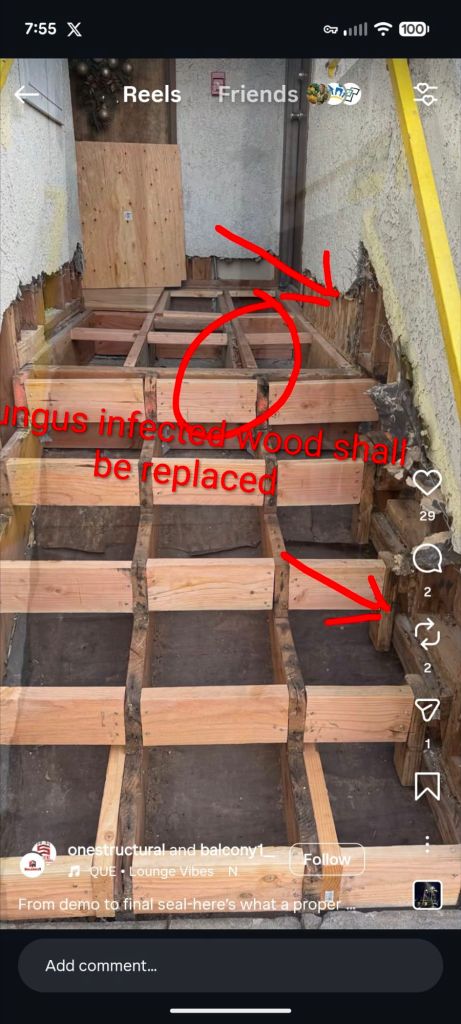
In the video it showed a timeline of rebuilding a set of stairs. As I watched it play out I screenshot a few pics, see below.

Starting with the framing rebuild, we can see water/fungus damaged stair stringers that weren’t replaced, damaged sheathing on the wall that wasn’t replaced and new wood that looks like my 3 year old nephew installed.
Continue reading Instagram Featured Video Stair Rebuild by One Structural/Balcony 1 Shows Multiple Construction Defects Being Installed in Real Time! →

Is Dr Balcony Competent to Discover Defects? We Have Doubts After Our Re-Inspection of EEEs Found Multiple Defects They Failed to Identify!

We were recently hired to do a follow-up inspection at a condo in the Los Angeles area. The client, an individual homeowner, had serious concerns about the report the association received from Dr Balcony. Their concerns began when the inspection was done, saying that a person showed up, said they weren’t licensed but that “someone” who was a licensed architect would review their photographs and information before signing the report.

We got a copy of the Dr Balcony report and reviewed it before we did our own inspection. (Please note our inspection was not an SB326 inspection.) Many of the photographs in the report were blurry and weren’t marked up to identify a defect that supposedly was in the photograph (we mark up all our photographs to show you exactly what defect we found) and the report was difficult to read. We completely agree with our client, I’ve read more than a few reports from other companies and Dr Balcony’s report is a tough read. Defect codes that are for their internal use confuse readers, information on an EEE are in different places and many photographs are of irrelevant subjects.

An example of that is Dr Balcony inspectors seem to obsess over code issues that SB 326 doesn’t require us to concern ourselves with. (We do check railing heights & railing stiles and note that they may not meet current code, same with stairs, but these aren’t noted as defects, rather we advise that the HOA may wish to address these in the future and that your insurance company may require upgrading in order to renew a policy).

Continue reading Is Dr Balcony Competent to Discover Defects? We Have Doubts After Our Re-Inspection of EEEs Found Multiple Defects They Failed to Identify! →

A Client Asked Us If We Are “Certified Deck Inspectors” Here’s Our Answer

Recently one of our clients who we have a proposal out with to coordinate their deck inspections under SB326 reached out with some follow-up questions. They wanted to know if we were going to use a boroscope camera and if we were “certified deck inspectors”. Our answer is no, we are not “certified”. Allow me to explain.

IMPORTANT NOTICE TO CONSUMERS! “California does not issue or require a credential called a ‘Certified Deck Inspector’ for SB 326 inspections. Private organizations may issue their own certificates, but consumers should determine who issued the credential, whether the certifying organization is independent of the inspection company, and whether the credential actually qualifies the individual to perform the inspection required by the applicable California statute.”

A quick search on Google showed us that there are several companies that advertise they are “certified deck inspectors”. Diving deeper, it seems all these unscrupulous inspection companies claiming they are certified inspectors are directly affiliated or owned by contractors. By claiming they are “certified inspectors” they seek to elevate their bonafides by saying they’re something that doesn’t exist in the SB326/SB721 inspection field. Continuing our search, the legitimate companies that we compete with make no such claim that they are certified. They make statements that they are architects or engineers, which is readily confirmed via the Board of Engineers and Board of Architects.

Continue reading A Client Asked Us If We Are “Certified Deck Inspectors” Here’s Our Answer →

SB-410 Takes Affect January 1st 2026, Is Your Inspector Compliant With Its Requirements? We Are!

January 1st is almost upon us and every year in California we see new laws come into effect on the first of the year and this year is no different.

You can watch our video here if you prefer

Deck Expert Bill Leys Discusses SB 410 & How It Effects HOAs & Deck Inspection Firms Reports

Notably for HOAs and balcony inspection companies SB 410 will take effect on January 1st and impose certain requirements on HOAs and on balcony inspection companies.

For HOA Boards of Directors, you are affected in several ways; the first being that SB326 reports are now considered to be HOA records, which means an owner can request and review them at any time. Secondly, reports cannot be withheld or redacted and third sellers of a common interest development property now must provide buyers with the most recent SB326 inspection report.

Continue reading SB-410 Takes Affect January 1st 2026, Is Your Inspector Compliant With Its Requirements? We Are! →

Don’t Take the Bait

I keep seeing some firms offering 20% off a competitors lower price to steal the deck inspection job away.

That should not inspire confidence in their capabilities as inspectors, in fact it should cause your board concern.

We allow ample time to perform the on-site balcony waterproofing observations,p giving ourselves the ability to really stop and review EEEs that raise our suspicions that something “maybe ain’t right” as we say in these parts lol. This method has proven to us over and over that careful Inspections take time and by taking our time, we often find hidden problems that a cursory inspection would miss.

Your balcony inspection is not something you should take lightly; there’s a lot of liability and if something goes awry, selecting the wrong deck inspection company with a contract that heavily favors them with clauses that excludes them for their errors and omissions will cause your HOA to assume liability.

I’ve heard of one company that has a forty page contract; ours is twelve pages for comparison. A forty page contract sounds like a nightmare that no average consumer can reasonably understand in my opinion. Without an attorney to review this kind of contract, you are probably signing something that is not beneficial to your Association. We recommend that all contracts be reviewed by an attorney prior to executing them, including ours.

Don’t rush to the conclusion that all balcony inspection companies are the same; they aren’t.  Let us show you why we are setting the bar in performing #SB326 waterproofing observations for independent structural engineers in Southern California. Reach out for a free proposal and a conversation on how we coordinate this critical inspection with you.