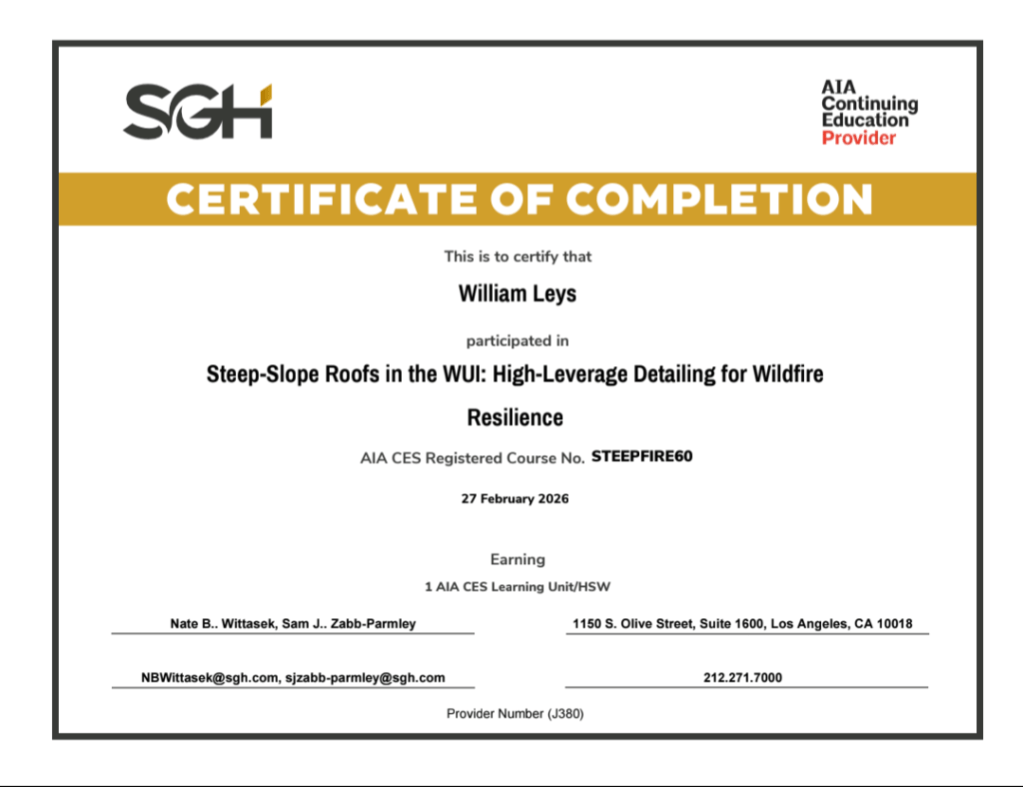
President Bill Leys of William Leys Waterproofing Consultants LLC recently attended a webinar presented by SGH on “Steep Slope Roofs in the WUI”.
The one hour AIA approved course discussed the additional requirements for roofs on homes and buildings in California’s Wildland Urban Interface (WUI) that increase a roofs resistance to ember storms which are one of the biggest causes of wildfires running unchecked through homes in vulnerable areas.
With this new knowledge and increased awareness of the challenges that homes face in the WUI, William Leys Waterproofing Consultants LLC is better prepared to assist our clients as their building envelope consultant.
Staying up to date on new requirements, products and technologies in construction is important and we are dedicated to increasing our knowledge so our clients can benefit.
Reach out today for a free discussion on what building envelope issues you may be experiencing and how we may be able to help.
Call today 805-801-2380.
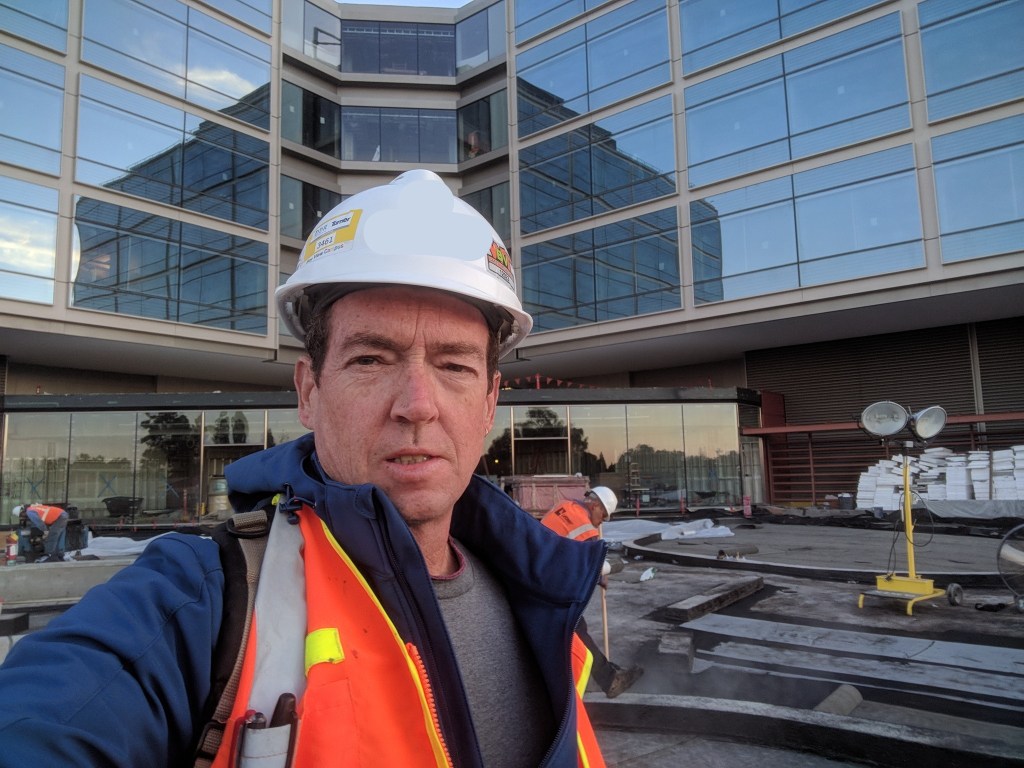
Bill Leys performing quality assurance inspections at Stanford Hospital in Palo Alto. When it comes to waterproofing buildings, clients reach out to William Leys Waterproofing Consultants LLC to bring that dream to life! We do consulting quality assurance inspections and leak investigations.
A client reached out to William Leys Waterproofing Consultants LLC to ask about what we know about Roof Maxx after getting a quote from them to treat the 15 roofs the condo association has. The reserve study says that they have to replace the roofs in about 5 years and at the current rate of savings and the amount of money in the reserves, they will not have enough money to pay for a roof replacement. Their thought was that they would have the roofs “roof maxxed” (our term) and extend the life of their roofs so that they can continue to put money into reserves instead of having to pass a special assessment to replace the roofs.
Watch our video on YouTube!
Certainly this is a noble idea and one that is worth considering at the least. The client had met Roof Maxx at an HOA event and the sales person at the luncheon was certainly persuasive selling the supposed virtues of Roof Maxx to my client.
However, my client recalled that I had impressed them with my deep knowledge on roofing and waterproofing and trusted me to get them information that they weren’t getting from Roof Maxx. So I started doing a dive into this newer product on the market here in California for them.
I started by reviewing roofMaxx.com and reading what they were saying on the website. One thing that stuck out to me was it says scientifically proven to restore moisture to aging shingles… It also says that Roof Maxx met ASTM e108 class a fire resistant standards.
So I found a copy of a technical report, apparently written by the Ohio State University college of food, agricultural and environmental sciences pertaining to ASTM testing of roofmaxx. The report pertains to information regarding ASTM testing of roofmaxx and describes roofmaxx as a soy methyl Esther based water emulsion used on asphalt roofing shingles that restores flexibility and therefore extends the service life of the roof.
Interestingly, this report doesn’t say roofmax actually does something. Instead they use language such as “The improvement observed in the Roof Maxx treated samples suggests that roof Max improves the durability of asphalt shingles and their wind resistance.” In another section that tested granule adhesion, the statement was that “the average weight of displaced granules decreased 46% after treatment with Roof Maxx in comparison to an untreated shingle. This implies a significant improvement in granule adhesion…”
Relating to spread of flame testing the company retained to perform testing used their own proprietary test that “simulates ASTM e108 Class A spread of flame testing”. The report says “the test showed that there was no visual difference between the spread of flame and the untreated shingles and the roof Max treated shingles, suggesting that roof Max application does not increase fire risks.” PRI Construction Materials Technologies performed the testing for the Ohio soybean council not roofmax. There are ASTM protocols and several tests for testing shingles and a testing lab can select which ones they want to use. By doing so, they can possibly manipulate the results to give the client what they want to hear. One thing that concerns me is they did their own proprietary flame spread test instead of an ASTM e108 test. ASTM e108 is basically the industry’s only accepted method of determining if a roof is Class A, B or c rated. In the report results from their proprietary spread of flame test, it states “initial flame was more intense with the roof Max treated specimen even though the resultant flame spread was not appreciably different from the untreated specimen. Post testing, the plywood deck of the roofmaxx sustained a flame, whereas the untreated flame extinguished quickly upon removing the gas torches.” If the roofmaxxed shingles plywood decks sustain the flame after the torches were put out, then that indicates that in a real-life wildfire situation that could pose a problem for homes treated with roofMaxx in my opinion.
Other claims that are made on the roof Max website are difficult to support such as that roof Max can cost up to 80% less than the full cost of replacing a roof. That may be or it may be significantly less than that depending on many individual circumstances. They say the roofmax takes just a few hours while roof replacement often takes a week or more. That may be true once the roof is clean but cleaning the roof is an essential part of a roof Max application and that requires a roof to be soft washed thoroughly and then allowed to dry before applying the roof Max product. It is also essential to the success of the roof Max product that it be applied at 100 square feet per gallon. Some of the videos I’ve seen in their advertising show a guy just spraying stuff around all up and down the roof without any idea of what kind of coverage he’s getting.
The other item that I found from the asphalt roofing manufacturers Association is a technical bulletin titled “Coating of asphalt shingles after installation” revised April 2021, and they State there that many asphalt shingle manufacturers specifically do not recommend field coating of their shingles. Additionally, state or local building codes may prohibit this practice as the field applied coatings may negatively impact the performance characteristics, including fire classification, lift p resistance, impact resistance, etc. of the roof assembly. Some of the problems reported after asphalt shingle roofs have been field coated include shrinking of the coating, which may result in curling and or cupping of the shingles or loosening of the granule surfacing of the asphalt shingles. In addition, non-permeable roof coatings may create a vapor retarding layer by sealing the boys around in between the shingles. If this occurs, it may contribute to moisture accumulation within the roofing system. It goes on to say there is limited available documentation showing the extent to which field coating of asphalt shingles provides any of the benefits claimed, but their risk and concerns mentioned about remains very real. In summary, the application of a coating may be detrimental to asphalt shingles. Be sure to check with your asphalt shingle manufacturer before terminating a specific rose coating, particularly if there is any warranty left on your roof that could possibly be voided if you treated the roof. You should also check with your local building and zoning department if this application is allowed.
We advised the client of all of this and gave them a quote to perform a thorough review and evaluation of their roofs complete with a report and photographs of our findings. The reason we offered to do this is so that they have a independent expert who is not trying to sell them a roof or a roof coating, but instead giving them independent information that allows them to make a good decision on how to proceed on their roof problem.
Our opinion is that we would be very hesitant about spending money on the Roof Max product and we would provide guidance to our clients that they should evaluate the pros and cons very carefully before committing to a pie in the Sky dream that may blow up in their face. If we recall from a few years ago, there were many pipelining companies saying that they could fix HOA, condo buildings, leaky pipes without replacement and all those companies are gone now. We don’t see them at trade shows or pumping white coatings through pipes anymore. I predict that we’ll see Roof Maxx blow up as a scheme that doesn’t perform as it is sold.
Please reach out to us for a free quote on doing a roof evaluation of your condo buildings and let us help you develop a scope of work to put out to bid for repairs or replacements of your roofs. Call today 805-801-2380.
We’re pleased to announce that we were recently hired by a Redondo Beach HOA that desperately needs to replace a failing waterproofing system on their podium deck.
The HOA sought several proposals from building envelope consulting firms and after interviewing and researching, the Board of Directors selected us, citing their previous experience working with us on their SB326 inspections and our detailed proposal and experience as waterproofing consultants.
Failing Waterproofing on a Podium Deck in Redondo Beach Will be Renovated
We will be writing a scope of work to put it to bid with several highly experienced contractors, perform non invasive testing of the deck to determine if there are any issues of concern and when the work begins, we will do quality assurance inspections to ensure the work is being done correctly.
The association had started asking contractors to give them bids without a scope of work and quickly realized that the bids were ranging in price by $100,000. This made the board realize that they needed help getting a scope of work together that would ensure that they solve their problems.
They realize it will cost them a little bit more money, but they understand that the value that a waterproofing consulting firm brings will save them many headaches as they head into this project.
Give us a call for a free consultation on how we can help your association and guide you through major capital projects like this. Call today 805-801-2380 ask for Bill
Even before William Leys Waterproofing Consultants LLC was formed, President Bill Leys has been assisting clients throughout California recover financial damages from contractors who caused construction defects that led to water intrusion and property damage. As an expert waterproofing consultant serving San Luis Obispo, Santa Barbara, Ventura, Kern and Los Angeles counties, we’ve helped clients recoup hundreds of thousands of dollars in the past few years.
Our expertise in building technology and waterproofing methods, investigative skills and ability to document and report on the problems, the causes and suggested repairs needed have allowed our clients to convince the Contractors State License Board, the contractors at fault and their Bond companies to act. We’ve seen great success with the CSLB investigating complaints, contractors agreeing to repair defective work and have bond and insurance carriers pay on claims made by our clients.
Some recent success stories include helping a client in San Bernardino recover 5k+ in damages caused by faulty deck waterproofing work by a contractor from Palm Springs. Our investigation found that the contractors “expert witness” actually had business ventures with his client, leading to the Judge concluding the contractors witness had implicit bias in favor of his client. In other words, his testimony was rejected by the Court. Our client got a court order that the contractor had to remove a lien on their home and could not collect $5,000 they claimed our client owed.
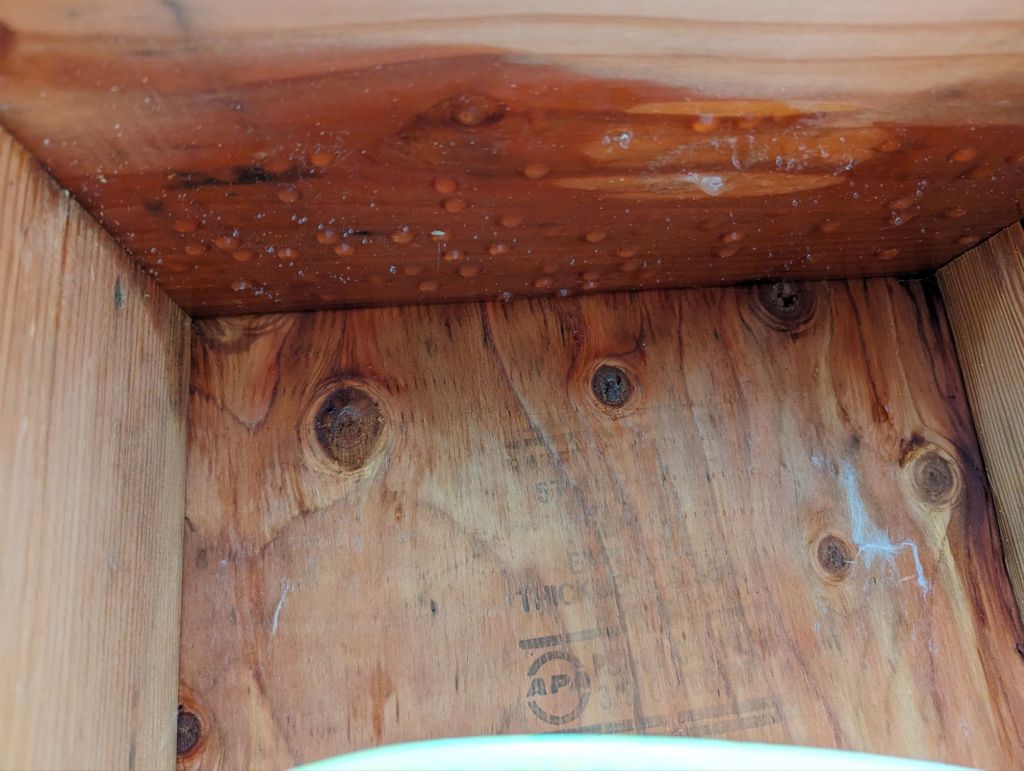
No blocking between the old and new plywood is a defect that will cause any waterproofing to eventually fail.
Another success story found us assisting a client in Avila Beach whose recent kitchen addition was apparently leaking. Our investigation found windows were leaking from faulty installation, deck flashing that leaked from faulty installation and as a result of our testing and report, the client was able to successfully initiate a claim against the contractors general liability insurance and recover funds to repair their damages. The client made a confidential settlement with the insurance company for well over 6 figures.
Water found inside the wall of a kitchen addition from defective installation of weather resistant barriers.
One of our greatest success stories is helping a senior couple in Morro Bay CA when their deck project went south on them. We did preliminary investigative work, finding that the waterproofing product a local Grover Beach construction company who calls themselves “San Luis Obispo’s Expert Deck Contractors” was improperly applied. The client, using our report, filed a claim with the CSLB and after the CSLB investigated, was able to recover over $30,000 in financial damages.
Destructive Testing Reveals That the Waterproofing Materials Specified Were Not Installed to the Minimum Specified Thickness
We were able to help a local non profit recover for damages caused by the improper installation of a low slope roof system last year; the entity was concerned after the roof was replaced and there were still leaks occurring. Our inspection and report found numerous defects in the installation of the single ply roof and with that in hand, our client was able to convince their contractor to repair and replace defective portions of the roof.
Improper termination of roofing system under a skylight.
If your building is suffering from water intrusion, if you suspect your home has defects, if your not getting a response from your contractor and keep getting brushed off, don’t delay any longer. Put the experts at William Leys Waterproofing Consultants LLC to work for you.
We can perform visual inspections, destructive testing (up to $1,000 in value) document the results, write reports that are easy to read, explain the problems and why we believe the defects are caused by a contractor or from defective materials and help you recover damages. Don’t let contractors ghost you, gaslight you or try and evade responsibility. Cslb laws are strict regarding time frames for when you can attempt to recover for damages. The sooner you act, the less damage will occur and the sooner you can start recovering.
William Leys Waterproofing Consultants LLC was recently retained by an upscale condominium complex in Los Angeles to investigate leaks from one recently repaired deck and stucco wall on one condo unit that was claimed to be leaking into an adjacent unit, causing damages to the home.
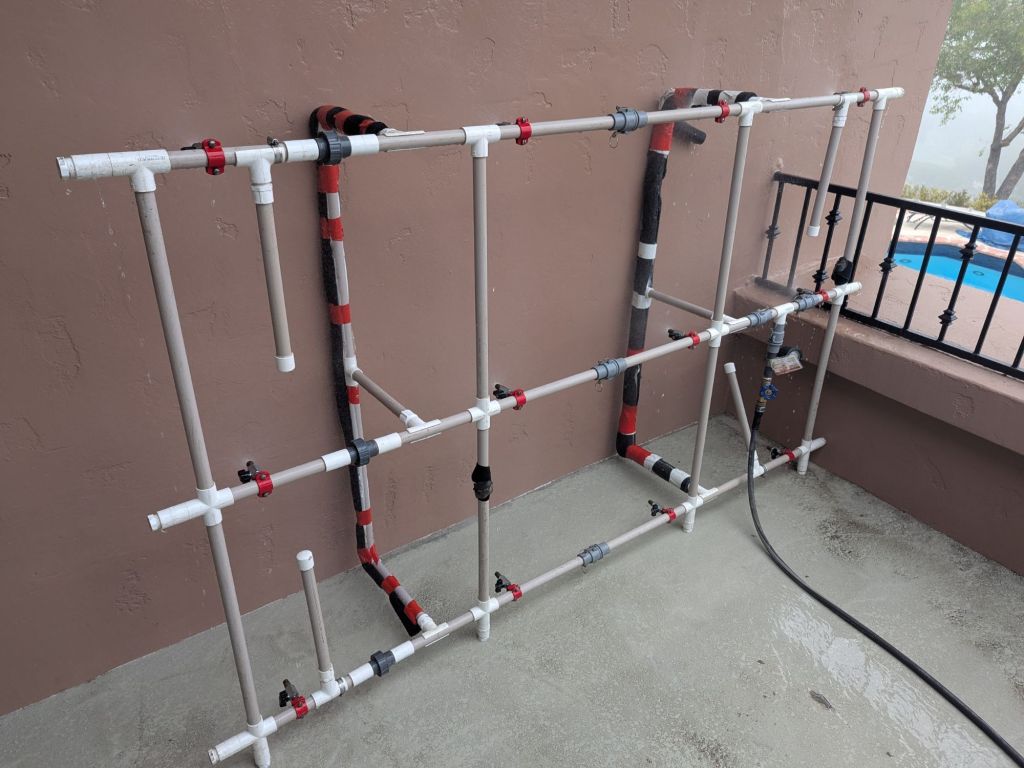
Using ASTM approved water testing methods, we set up a spray rack that sprays up to 2 hours of rain in a twenty minute period to mimic actual weather conditions.
A spray rack set up against the wall imitates rainfall against a building in an industry standard testing method. These racks are calibrated and tested to meet requirements under ASTM testing methods.
Using our methodical testing approach, we were able to prove that the wall shown in the photograph above was in fact leaking. Using litmus paper and visual observations during the methodical cyclic testing as prescribed by ASTM showed conclusively that the newly repaired wall was in fact leaking at four locations.
Litmus paper has changed color, showing that water is leaking through or past the weather resistant barrier, and water is visible on the right side of the photograph where improper laps leave the stucco wall exposed, allowing water to enter dry space.
With this proof in hand, the Association can now move ahead with correcting the deficiency and fix the interior space. Liability on the proper responsible party that created this defect can now be established and legal counsel can now move forward with making claims against the contractor and his insurance company. Without standardized ASTM testing their claim would be very difficult to support in a court room.
A Flir Thermal Imaging camera shows the path of water in blue. Thermal cameras are important to use in leak investigations as they provide secondary evidence that supports the primary evidence.
When your buildings leak, call us first to establish where the leaks are coming from and with our investigative team of water intrusion experts, we can help you determine the source of the leaks, why they leak and who is responsible for the leaks. Don’t wait or let your contractor deny responsibility, put us on your team!
Reach out for a free conversation on how William Leys Waterproofing Consultants LLC can help you.
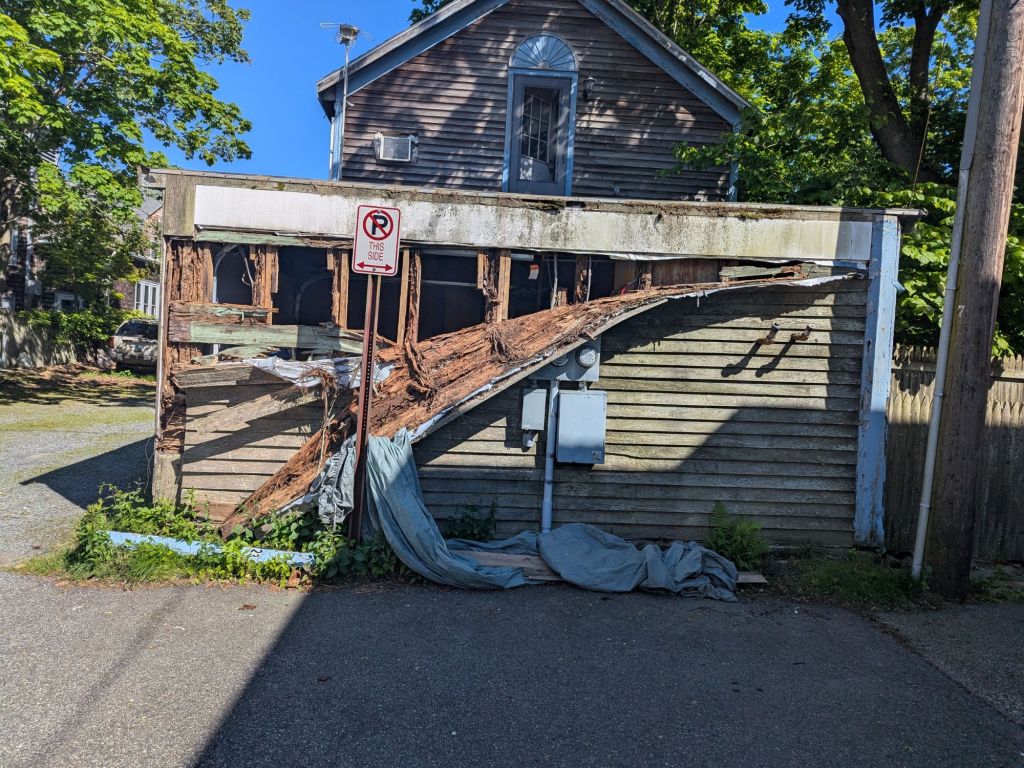
Long term leaks into this building has destroyed the framing behind the siding and because it is so rotted, the siding doesn’t have anything left to be attached.
As building envelope consultants we are often hired to determine where why and how a roof, siding or windows are leaking. After doing destructive testing and finding what caused the problem, it’s often an installer error that created the problem. Yes sometimes it’s defective waterproofing products, but that’s the exception, not the rule.
For architects and their home building clients, one way to ensure that the building envelope is going to perform correctly for it’s expected life span is to hire a waterproofing consultant to review the architects building envelope details, and to perform quality assurance inspections while the building is being dried in. Drying in a building entails roofs, below grade waterproofing, building paper over the plywood covered walls, window and door flashing for example. All of these need to be installed in a sequence to work together for the building to remain leak free.
Whether you are building tract homes, commercial/residential, condos or a spec home, a small add to the project budget to include a waterproofing consultant to assist in keeping your project leak free is a good investment. Consider the costs when a building does leak; there’s investigative costs, loss of use, possible mold claims, expensive repairs and everyone is aggravated.
William Leys Waterproofing Consultants LLC is here to help you with making your building project a success. Reach out today for a discussion on how we can help bring value to your project.
We were recently retained to perform an evaluation of a large low slope roof on a manufacturing building in Los Angeles.
The seam is splitting where it overlaps one sheet to another.
The client is interested in installing solar panels on the roof and needed to know what the buildings roof condition was, and whether they should repair or replace the roof.
For a very reasonable fee we performed a visual inspection and wrote a report for the client.
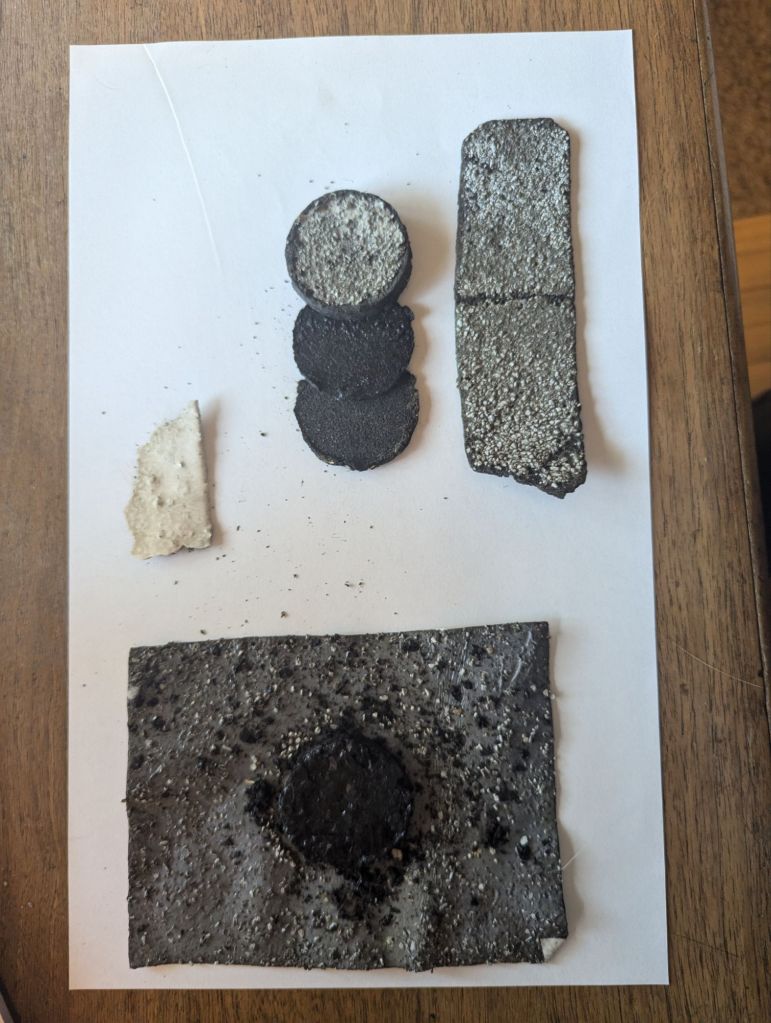
Samples of roofing to examine.
Some of our findings were that the existing roof system was splitting at seams, that multiple unsuccessful repair attempts actually were making leaks worse, and that the numerous sunlights were starting to deteriorate and would need to be replaced in the near future.
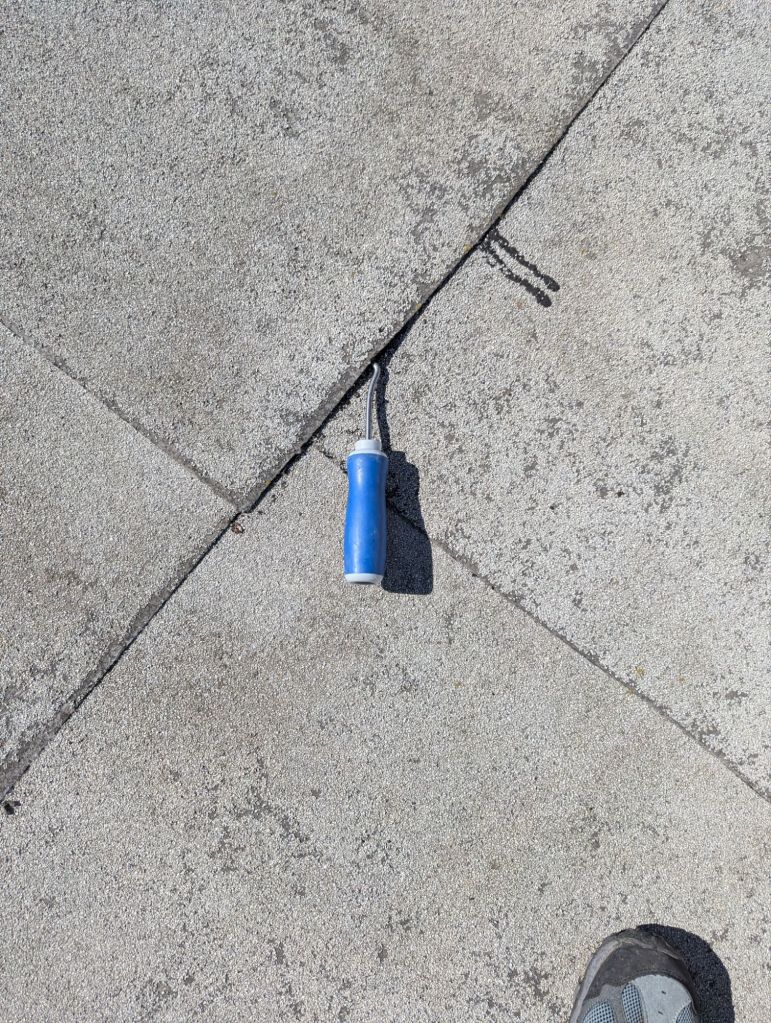
We also found a bullet, numerous nails and screws left by HVAC contractors around the roof top HVAC units that were damaging the roof as well.
Coping termination beginning to fail.
As an independent professional consultant, we’re not trying to sell you anything. We give you factual information and options on how to approach your roof and what it needs. If you then need help specifying your new roof or repairs we can assist you with that as well so that you get three bids that are comparable in the scope of work.
Reach out today for a discussion on how William Leys Waterproofing Consultants LLC can help your building repair needs.
SB 326 Deck Inspections & Building Envelope & Waterproofing Experts








 SB 326 Deck Inspection Specialists * Building Waterproofing Consultants * Construction Defect Investigations By Bill Leys The Deck Expert